

Introduction
For generations, pure cow ghee and butter have been staples in kitchens around the world. While butter is loved for its creamy texture and rich flavor, pure cow ghee has earned a reputation as a traditional superfood in Indian households and Ayurvedic practices. Today, many people wonder which one is the healthier choice.
The answer isn't as simple as choosing one over the other. Both ghee and butter are made from milk fat, but they differ in their preparation, nutritional composition, cooking performance, and suitability for different diets.
Whether you're trying to eat healthier, lose weight, follow a keto diet, or simply choose the best cooking fat for your family, understanding these differences can help you make an informed decision.
In this guide, you'll discover how pure cow ghee compares with butter, their nutritional value, health benefits, potential drawbacks, and which one may be the better option for your lifestyle.
Ghee vs Butter – Which Is Better?
Pure cow ghee is generally a better choice for high-heat cooking because it has a higher smoke point and contains very little lactose or casein. Butter, however, offers a creamy taste that's ideal for baking and spreading. The healthier option depends on your dietary preferences, health goals, and how you use it in your meals.
Pure Cow Ghee vs Butter
|
Feature |
Pure Cow Ghee |
Butter |
|
Preparation |
Clarified butter |
Churned cream |
|
Smoke Point |
High (around 250°C) |
Lower (around 175°C) |
|
Lactose |
Very low |
Contains lactose |
|
Casein |
Very low |
Present |
|
Shelf Life |
Longer |
Shorter |
|
Flavor |
Rich, nutty |
Creamy |
|
Best Use |
Frying, sautéing, Indian cooking |
Baking, spreading, sauces |
|
Storage |
Can often be kept at room temperature (if stored properly) |
Usually refrigerated |
What Is Pure Cow Ghee?
Pure cow ghee is a form of clarified butter prepared by gently heating butter until the water evaporates and the milk solids separate from the fat. The remaining golden liquid is filtered, resulting in a flavorful cooking fat with a distinctive aroma.
In India, pure cow ghee has been used for centuries in cooking, religious rituals, and traditional Ayurvedic practices. Today, it remains a popular choice because of its versatility and long shelf life.
Key Characteristics of Pure Cow Ghee
-
Rich golden color
-
Nutty aroma
-
High smoke point
-
Naturally free from water
-
Minimal lactose and casein after proper clarification
-
Suitable for many traditional Indian recipes
Many consumers also prefer organic pure cow ghee made using traditional methods from high-quality milk.
How Is Ghee Made from Butter?
Understanding the production process helps explain why ghee differs from butter.
The process begins with butter, which is slowly heated over low heat. As it cooks:
-
Water evaporates.
-
Milk proteins settle at the bottom.
-
Foam forms on the surface.
-
The remaining fat becomes clear and golden.
-
The liquid is filtered to remove milk solids.
The result is pure cow ghee with a richer flavor and greater heat stability than butter.
Traditional Bilona ghee follows a more time-intensive process using cultured curd and hand-churning, while commercial ghee is often made by clarifying butter on a larger scale.
What Is Butter?
Butter is produced by churning fresh cream until the fat separates from the buttermilk. Unlike ghee, butter retains water and milk solids, giving it a softer texture and creamy taste.
Different varieties include:
-
Salted butter
-
Unsalted butter
-
Cultured butter
-
Grass-fed butter
Butter is commonly used in:
-
Baking
-
Toast
-
Cakes
-
Cookies
-
Sauces
-
Pasta
-
Sandwiches
Its lower smoke point means it can burn more quickly than ghee at high cooking temperatures.
What Are the Key Nutritional Differences Between Ghee and Butter?
Although both are primarily sources of fat, their nutritional profiles vary slightly because of the clarification process.
Nutrition Comparison
|
Nutrient |
Pure Cow Ghee |
Butter |
|
Calories |
Similar |
Similar |
|
Total Fat |
High |
High |
|
Saturated Fat |
High |
High |
|
Water |
None |
Present |
|
Lactose |
Very Low |
Present |
|
Casein |
Very Low |
Present |
|
Vitamin A |
Good Source |
Good Source |
|
Vitamin E |
Present |
Present |
|
Vitamin K |
Present |
Present |
Because milk solids are removed during clarification, ghee contains very little lactose and casein, making it a suitable option for many people who are sensitive to these components. However, individuals with severe dairy allergies should consult a healthcare professional before consuming it.
Why Is Pure Cow Ghee Considered Healthier Than Butter?
Many nutrition experts recommend pure cow ghee for specific cooking applications because of its unique properties.
1. Higher Smoke Point
One of the biggest advantages of pure cow ghee is its high smoke point.
When oils or fats exceed their smoke point, they begin to break down and produce undesirable compounds.
Since ghee tolerates higher temperatures, it is well suited for:
-
Deep frying
-
Stir-frying
-
Roasting
-
Sautéing
2. Easier for Some People to Digest
During clarification, much of the lactose and casein are removed.
This makes pure cow ghee a practical choice for many people who experience mild lactose sensitivity.
3. Rich in Fat-Soluble Vitamins
Pure cow ghee naturally contains fat-soluble vitamins, including:
-
Vitamin A
-
Vitamin D
-
Vitamin E
-
Vitamin K
These nutrients support normal bodily functions and are best consumed as part of a balanced diet.
4. Traditional Ayurvedic Importance
Ayurveda has valued pure cow ghee for centuries as a nourishing ingredient used in various culinary and traditional wellness practices.
It is often included in:
-
Khichdi
-
Dal
-
Herbal preparations
-
Festive sweets
5. Excellent Flavor
Pure cow ghee offers a rich, nutty aroma that enhances the taste of many Indian dishes.
Popular recipes include:
-
Dal Tadka
-
Jeera Rice
-
Rotis
-
Parathas
-
Halwa
-
Biryani
Health Benefits of Butter
Although ghee receives significant attention, butter also provides nutritional value.
Butter Offers
-
Rich creamy flavor
-
Source of vitamin A
-
Ideal for baking
-
Excellent for pastries
-
Smooth texture for sauces
-
Versatile everyday ingredient
Butter remains a preferred option for recipes where its flavor and moisture contribute to the final texture, such as cakes, cookies, and croissants.
Key Takeaways
-
Pure cow ghee and butter are both dairy fats but differ in preparation and composition.
-
Ghee has a high smoke point and contains only trace amounts of lactose and casein after the clarification process.
-
Butter is prized for its creamy flavor and works especially well in baking and spreads.
-
Choosing between them depends on your cooking style, taste preferences, and dietary needs.
Ghee vs Butter: A Detailed Comparison
Although pure cow ghee and butter come from the same source, their nutritional profiles, cooking performance, and ideal uses differ. The right choice depends on your cooking style, dietary preferences, and health goals.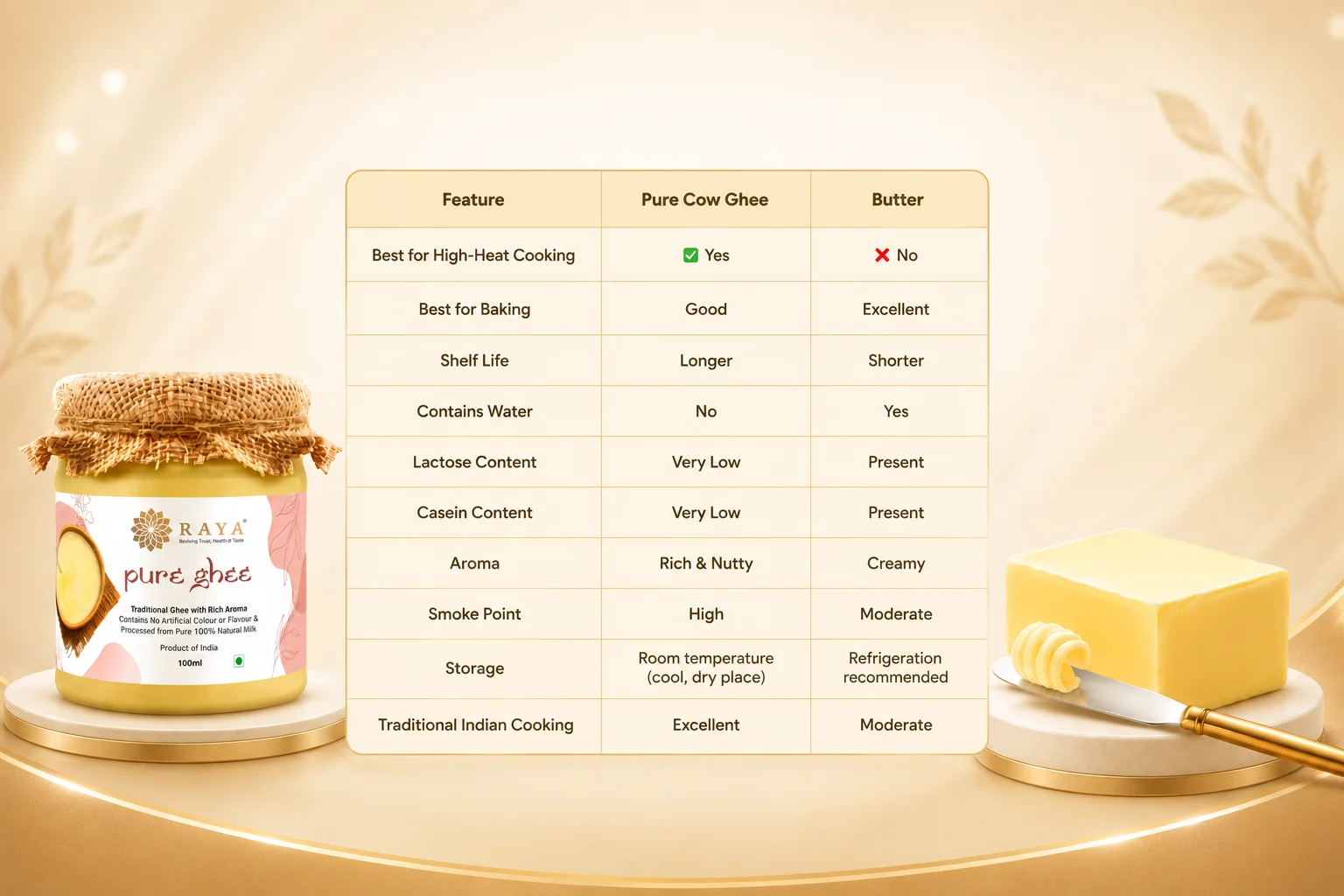
Comparison Table
|
Feature |
Pure Cow Ghee |
Butter |
|
Best for High-Heat Cooking |
✅ Yes |
❌ No |
|
Best for Baking |
Good |
Excellent |
|
Shelf Life |
Longer |
Shorter |
|
Contains Water |
No |
Yes |
|
Lactose Content |
Very Low |
Present |
|
Casein Content |
Very Low |
Present |
|
Aroma |
Rich & Nutty |
Creamy |
|
Smoke Point |
High |
Moderate |
|
Storage |
Room temperature (cool, dry place) |
Refrigeration recommended |
|
Traditional Indian Cooking |
Excellent |
Moderate |
Advantages of Pure Cow Ghee
Pure cow ghee has remained a kitchen staple in Indian households because of its versatility and rich flavor.
Key Benefits
-
High smoke point suitable for frying and sautéing.
-
Rich, nutty taste that enhances Indian recipes.
-
Longer shelf life than butter.
-
Very low lactose and casein after clarification.
-
Contains fat-soluble vitamins such as A, D, E, and K.
-
Works well in traditional and modern recipes.
-
Ideal for keto and low-carb cooking.
-
Adds depth of flavor without burning quickly.
Disadvantages of Pure Cow Ghee
Like any fat, moderation is important.
Consider These Points
-
High in calories.
-
Contains saturated fat.
-
Premium-quality ghee may cost more than butter.
-
Not suitable for individuals with certain dairy allergies.
-
Excess consumption may not fit every dietary plan.
Advantages of Butter
Butter also offers several benefits, particularly in baking and Western-style cooking.
Benefits
-
Soft, creamy texture.
-
Excellent flavor in cakes and pastries.
-
Widely available.
-
Less expensive than premium ghee in many markets.
-
Easy to spread on bread and toast.
-
Ideal for sauces and desserts.
Disadvantages of Butter
Butter has a few limitations compared to ghee.
-
Lower smoke point.
-
Burns more quickly during high-heat cooking.
-
Contains lactose and milk solids.
-
Shorter shelf life.
-
Requires refrigeration for freshness.
Which Is Better for Different Health Goals?
For High-Heat Cooking
Winner: Pure Cow Ghee
Its higher smoke point makes it more stable for frying, roasting, and sautéing.
For Baking
Winner: Butter
Butter provides moisture and a creamy texture that many baked goods require.
For Keto Diets
Many people following keto or low-carb diets choose pure cow ghee because it is almost entirely fat and works well in high-fat meal plans.
For Indian Cooking
Traditional Indian dishes such as dal, khichdi, biryani, parathas, and halwa are often prepared with pure cow ghee because of its distinctive aroma and flavor.
For Lactose Sensitivity
Since properly clarified pure cow ghee contains very little lactose or casein, it may be tolerated by some people with lactose sensitivity. Individual tolerance varies, so consult a healthcare professional if you have concerns.
Who Should Choose Pure Cow Ghee?
Pure cow ghee can be a suitable choice for:
-
Home cooks preparing Indian cuisine.
-
People who frequently cook at high temperatures.
-
Individuals following keto or low-carb diets.
-
Those seeking a traditional cooking fat.
-
Anyone looking for a rich, nutty flavor in everyday meals.
Who May Prefer Butter?
Butter may be a better option for:
-
Baking enthusiasts.
-
People who enjoy creamy spreads.
-
Those preparing pastries, cookies, or cakes.
-
Recipes where moisture and buttery flavor are essential.
Expert Tips for Choosing Between Ghee and Butter
Choosing the right cooking fat depends on how you plan to use it.
Expert Recommendations
-
Use pure cow ghee for frying, roasting, and Indian recipes.
-
Choose butter for baking and spreads.
-
Buy products with minimal ingredients.
-
Store ghee in a clean, dry container away from moisture.
-
Always use a dry spoon to avoid contamination.
-
Enjoy both in moderation as part of a well-balanced diet.
Ghee Consumption Trends in India
Growing awareness about traditional foods and cooking practices has increased interest in pure cow ghee.
Market Trends
-
More consumers are choosing minimally processed foods.
-
Organic and traditionally prepared ghee continues to gain popularity.
-
Premium dairy products have seen rising demand in urban markets.
-
Health-conscious families increasingly use ghee for home cooking.
These trends highlight a renewed appreciation for traditional cooking fats alongside modern nutrition awareness.
Case Study: Switching from Butter to Pure Cow Ghee
Background
A family that regularly used butter for cooking decided to switch to pure cow ghee for everyday Indian meals.
Changes Made
-
Replaced butter with ghee in dal and vegetable dishes.
-
Used ghee for tempering spices.
-
Continued using butter only for baking.
Observations
-
Improved flavor in traditional recipes.
-
Better cooking performance at higher temperatures.
-
Reduced burning during frying.
-
Greater satisfaction with the aroma of home-cooked meals.
Key Takeaway
Using the right fat for the right purpose can improve both cooking results and overall meal enjoyment.
Where to Buy Organic Pure Cow Ghee?
Choosing quality matters just as much as choosing between ghee and butter.
Before purchasing, look for:
-
100% pure cow milk source.
-
No artificial preservatives.
-
Trusted brand reputation.
-
Food safety certifications.
-
Airtight packaging.
-
Clear manufacturing and expiry dates.
Brands like Raya focus on delivering premium-quality pure cow ghee prepared with strict quality standards, making it a reliable choice for families seeking authentic taste and purity.
Frequently Asked Questions
1. Is pure cow ghee healthier than butter?
Pure cow ghee has a higher smoke point and contains very little lactose or casein after clarification, making it suitable for many cooking applications. The healthier choice depends on your overall diet and individual needs.
2. Can I replace butter with pure cow ghee?
Yes. Pure cow ghee can be used instead of butter in many recipes. However, baking recipes may need slight adjustments since butter contains water, whereas ghee does not.
3. Does pure cow ghee contain lactose?
Properly clarified pure cow ghee contains very little lactose and casein, though individual tolerance can vary.
4. Which is better for Indian cooking?
Pure cow ghee is generally preferred because of its rich aroma, high smoke point, and traditional use in Indian cuisine.
5. Is pure cow ghee suitable for everyday use?
Yes, when consumed in moderation as part of a balanced diet, pure cow ghee can be included in everyday cooking.
6. How should pure cow ghee be stored?
Store it in a cool, dry place in an airtight container. Always use a clean, dry spoon to maintain freshness.
Conclusion
Both butter and pure cow ghee have unique qualities, and neither is universally "better" for every situation. Butter shines in baking and provides a creamy flavor that many recipes rely on, while pure cow ghee stands out for its high smoke point, rich taste, and versatility in Indian cooking.
If your goal is to prepare meals at high temperatures, enjoy traditional flavors, or choose a cooking fat with a longer shelf life, pure cow ghee is an excellent option. Butter remains the preferred choice for baked goods, spreads, and recipes where its moisture and texture are essential.
Ultimately, the best choice depends on your cooking habits, dietary preferences, and portion control. Including either in moderation as part of a balanced diet can help you enjoy their unique benefits.
Choose Premium Pure Cow Ghee from Raya.
Looking for authentic pure cow ghee that delivers traditional taste and trusted quality?
Raya Pure Cow Ghee is crafted with care to bring rich flavor, purity, and consistency to your everyday cooking. Whether you're preparing classic Indian dishes or adding a finishing touch to your favorite recipes, Raya offers the quality you can rely on.
Experience the authentic taste of Pure Cow Ghee with Raya and make every meal more wholesome and delicious.
Follow us for more wellness tips
👉 Buy Now on rayaoniss.com
👉Also available on Amazon & Flipkart
📸 Instagram: instagram.com/raya_oniss
📘 Facebook: facebook.com/RAYA.ONISS
▶ YouTube: youtube.com/@RAYA-ONISS